Overview
A spring open house is the single biggest recruiting event of the year for many successful packs. It is a low-pressure afternoon or evening where prospective families come, kids have real Scout fun, and parents get a clear picture of what joining looks like. Experienced leaders favor spring recruiting over the traditional fall sign-up window. Spring gets around the September and October rush of a new school year and popcorn sales, and gives families a full summer of fun. If you prefer a fall open house, switch seasons with the campfire.
Two audiences, two spaces
A great open house serves two customers at once and gives each their own space:
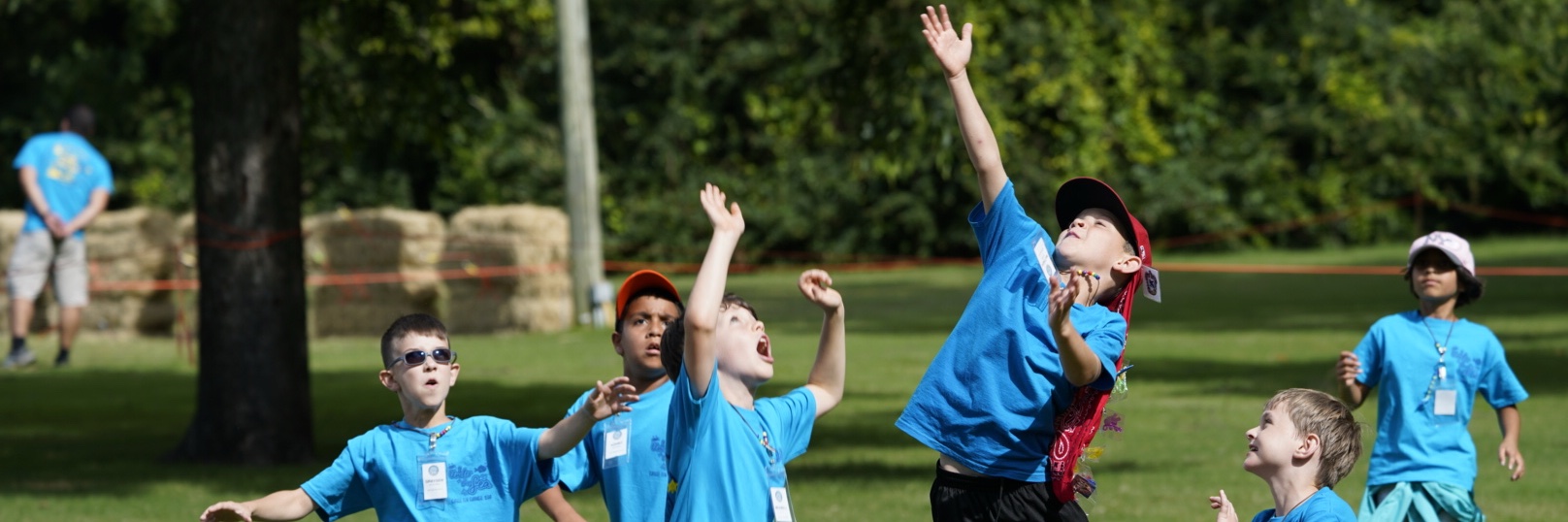
- The kids: hand them off to your den leaders for fast, loud, hands-on fun. Put new recruits and current Scouts together, led by an older youth leader (Arrow of Light or invited troop members such as patrol leaders, guides, or den chiefs). Quick wins work best: see the activity station ideas on the Scout Jamboree page for a full menu of Cub-age activities.
- The parents: after the kids are organized, pull the parents aside for a short, honest conversation about the benefits of Scouting, cost, time, and the year ahead. If possible, bring a Cub Scout alum from the local Scout troop to speak to the parents directly. Letting parents see and hear an impressive young Scout is the strongest possible proof of what the program produces. Parents should be able to hear the excitement of the kids nearby.
Fun first, not a lecture
The principle that effective Scout leaders repeated: do not make kids sit still while adults talk. Kids learn while they have fun. Keep the activity unstructured so they can roam, explore, and start having fun within seconds. The fun is the argument.
A low-commitment on-ramp
Lower the barrier to a yes. Encourage families to sign up, but if they are not sure they can just try it for a few weeks. Big activities like camping are the natural forcing function: it is the moment families commit, because it is when registration and insurance matter, and it is the thing kids beg to do again. Some packs give a Scout handbook as a welcome gift. A few unused copies are worth the families it converts.
Talk to each audience in its own language
Match the message to who is listening:
- To kids: adventure, knife skills, fire building, water rockets, the fun stuff.
- To parents: fun, leadership, character, and getting kids off screens.
Parents (most often moms) run the family calendar, so make sure they hear from other Scout moms that a family can do sports, academics, and Scouts without burning out. Keep the age shift in mind: younger children (around fifth grade and under) are influenced mostly by their parents, while older kids (sixth grade +) lean on their peers. A Cub-age open house is therefore really a sell to the parents.
Scale the stations to the crowd
Size the event to expected attendance so wait times stay short and kids stay engaged:
- Under about 10 kids: keep it simple, two or three activity stations and some games.
- Up to about 20 kids: four to six activities are plenty.
- Up to 50 or more kids: plan many stations with many kids participating in parallel to keep lines moving and energy high.
What actually drives recruiting
The open house is one piece of a bigger truth: a good pack grows from a good program, and a good program grows by word of mouth. Families who have fun bring other families. Recognize Scouts who recruit a friend (make a big deal of a "recruiter" award). And follow up fast: respond to every lead the same day with a short template, invite them to a specific next event, and track every lead from first contact to joined or passed. This can be delegated to an organized volunteer.
Calendar of Activities
Plan backward from your event date. A spring open house needs more lead time than the event itself: the recruiting work happens in the weeks before, and the conversion happens in the days after.
Planning timeline
- 8 weeks out: Choose a spring date and an outdoor location such as a local park. Update your BeAScout.org listing so it shows your meeting day, location, and contact. Line up your youth leaders, and invite a local Scouting America troop to help staff stations (it earns them service hours). Start recruiting station volunteers in small, well-defined roles.
- 6 weeks out: Arrange school outreach: ask principals or teachers to email families (some schools have a "Digital Backpack" where you can submit a flyer), get your notice into PTA newsletters. Ask your local council for help printing yard signs with the date and location. Build your email reply templates and a lead-tracking spreadsheet.
- 3 weeks out: Place yard signs where families will see them, especially in school pickup and drop-off lines and in clear line of sight. Push the Digital Backpack and newsletter blurbs. Ask every current Scout to personally invite one or two friends.
- 1 week out: Confirm volunteers, stations, and materials. Prepare the “Our Next Adventures” follow-up cards, listing two or three dated, fun, guest-friendly upcoming events to hand to every family. Send a reminder to every family who has expressed interest.
Day of: run of show
- Before families arrive: Set up stations and post clear signs. Brief volunteers on safety and on keeping lines short.
- As families arrive: Greet them and send the kids straight to a youth leader and a fun station. Do not gather everyone for a speech.
- During: Let kids roam between unstructured stations. Pull out a signature group activity (such as tug of war or Simon says) at a couple of set times to gather the energy.
- Parent conversation: While the kids play, give parents a short, honest talk about Scout fun, principles, and program outcomes. Cover costs, time, and the year ahead, then bring a youth leader or Eagle Scout in to speak to them about why they liked Cub Scouts.
- Capture and close: Collect contact information from every interested family and invite them to either sign up now or come to a specific next event.
After the event
- Follow up no later than 48 hours (same day is best), with a short, friendly template. Invite each family to your next meeting and your next campout. Track every lead from first contact to joined or passed so you can measure and improve.
Advertising & Marketing
The best advertising is a fun pack: families who have a good time bring other families, and that word of mouth outperforms any single tactic. The channels below exist to get new families in the door so your program can do the rest.
Word of mouth (your strongest channel)
Families who have fun recruit other families, especially at the start of the school year. Make it deliberate: ask every Scout to invite one or two friends, and recognize the ones who do with a "recruiter" award that you make a big deal of.
School channels
- Confirm in advance whether each school allows physical flyer handout, and ask early.
- Form a relationship with your school principals. Ask how to email families, and add your blurb to a school email.
- Use the school's electronic flyer system ("digital backpack") to distribute your event flyer.
- Get into the PTA newsletter for each school.
- Make a list of every school and preschool in your area (an AI assistant can build this quickly) and see if any preschools with kindergarten classes will share your flyer.
Yard signs
Council or pack yard signs work well in school pickup and drop-off lines. Keep them in clear line of sight, and include the event (or pack meeting) date and location.
Keep BeAScout current
Update your BeAScout.org listing with your meeting day, location, and contact. New families routinely report finding a pack through a newsletter, a yard sign, or word of mouth, so make sure that when they look you up, the information is right.
Respond fast, every time
Reply to every inquiry the same day. Use email templates so you can answer immediately: who your pack is, what Cub Scouts is about, and a specific invitation to your next meeting or event. A fast, specific reply converts far better than a slow, generic one.
Track your leads
Keep a simple spreadsheet of every lead, from the date you first hear from them to the day they commit or pass. It tells you what is working and keeps families from slipping through the cracks. As a benchmark, one pack tracked 48 leads in a season and converted 22 of them.
Activities
Pick a handful of stations that fit your crowd size (see the scaling guidance in the Overview) and let kids move freely between them. Inviting a local Scouting America troop to run stations gives your event older-Scout energy and earns the troop service hours.
| Station | What kids do | Typical materials |
|---|---|---|
| Tent setup | Pitch a tent, or race to set one up. | A few tents, open grass. |
| Knot tying: Learn and apply fun Scout knots |
|
Ropes, a knot reference board, closeline poles, logs to drag, a box/skateboard to pull. |
| First aid basics | Try simple first aid skills. | Bandages, slings, a demonstration kit. |
| Fishing / casting | Practice casting, or fish if water is nearby. | Fishing rods and practice casting plugs, or a magnet-fishing pond for younger kids. |
| Paracord bracelets | Make a bracelet to wear home. | Paracord, buckles, scissors. |
| Water rockets | Pressurize and launch bottle rockets. | 2-liter bottles, a launcher, water, a pump. |
| Neckerchief slides | Make a slide from a slice of wood and a piece of pipe (cut the pipe, then draw on the wood). | PVC pipe, wood slices, a saw for adult use, markers. |
| Rope (monkey) bridge | Cross a low rope bridge. | Monkey bridge rigging, anchors, trained adults. |
| Campfire & s'mores | Roast s'mores, especially good for small groups. | Fire ring, s'mores supplies, adult supervision. |
Signature group moments
- Tug of war: bring it out at set times to gather the crowd, then run adults versus Scouts. Kids love it.
- Quick-win races: simple, fast contests any kid can succeed at, such as a tent-setup race, a race to open a sealed container of candy, or a stretcher build-and-carry relay.