Overview
A campfire is an easy way to showcase Scout fun. Invite Scouts, leaders, and families for songs, short skits, stories, and a treat. It does not strictly have to happen after dark (or even with a real fire) if conditions do not allow. The spirit of the campfire is camaraderie, not the flame itself, so battery lanterns or work lights under an awning are fine substitutes during a burn ban or bad weather.
Since fall (end of August through end of September) can be very busy for Cub Scout packs, a campfire is an easy event to hold, popular with families, and works well as the seasons change. You could switch the open house for the campfire if that is better for your pack.
Keep it short
Keep it short and brisk for this age group. The sweet spot is around 60 minutes. It is tempting to turn a campfire into an extended songfest, but resist that and always leave the audience wanting more. One rule is specific to Cubs: a Cub Scout campfire should be hosted by an adult (unlike older Scout campfires, which the youth can run themselves).
Use the fire as your pacing guide
Start with some energetic songs or games to bring the kids together before lighting the fire. The program works best when you use the fire as a pacing guide. High flames call for energetic songs and skits. As the fire burns lower, transition to slower songs and reflective moments, closing with a calm song or a short Cubmaster's Minute. Assign a few simple roles ahead of time and ask them to hold a planning and practice session in advance:
- Master-of-the-Campfire: the emcee and planner.
- Song-Master: leads the songs.
- Cheer-Master: runs cheers and applause.
- Keeper-of-the-Flame: focused solely on the fire.
Content standards
This is a family audience, so set the tone in advance: avoid skits or jokes that target Scouts, leaders, or parents, allow no bathroom humor or dirty jokes, and screen and have the Master of the Campfire approve all skits, songs, and stories beforehand. Skits are much funnier when Cub Scouts practice in advance.
Calendar of Activities
This covers the lead-up planning for the event.
8 weeks before
- Pick a date, a location, and a rain or no-fire backup plan.
- Reserve the space or get a permit if required.
- Assign the emcee, song-master, cheer-master, and fire keeper.
- Start collecting song, skit, and story sign-ups from dens. Many packs use a campfire program planner sheet where each den or individual writes down their song, skit, or story. Scouting America Campfire Program Planner template.
- Prepare flyers that your Scouts can give to invited guests. A quarter page is fine; mention s'mores!
2 weeks before
- Have every Scout invite two friends and their families to attend the campfire. Pass out flyers with the date and location that Scouts can give to their friends.
- Email the school PTA group and school newsletter with the details of the event.
1 week before
- Build the program order (see the run-of-show below) and time each act.
- Confirm the s'mores supply list and who is bringing what.
- Prepare the “Our Next Adventures” follow-up cards: a printed card listing two or three dated, fun, guest-friendly upcoming events to hand to every family.
Day before and day of (setup)
- Gather fire safety gear: water, sand, and shovels, kept nearby at all times.
- Prep the fire site using an existing ring where possible to follow Leave No Trace.
- Lay out roasting sticks, food, hand wipes, and printed song lyric sheets.
Advertising & Marketing
The goal is to get families excited, gather sign-ups for performances, and make sure people show up hungry for s'mores.
- Announce at the pack meeting and in your pack's usual channels (email, Scoutbook, or app) with the date, time, location, and what to bring (camp chairs, a jacket, a flashlight).
- Send a simple flyer home with Scouts to invite their friends and post it digitally.
- Circulate the sign-up and program planner sheet early so dens can claim a song, skit, or story. This doubles as advertising because it gets families invested.
- Promote s'mores specifically. Kids love 'em.
Activities
Songs (the backbone)
Choose songs by tempo to match the fire: kick off with lively, rowdy songs and action songs that use hand motions, feature medium-tempo songs in the main portion, and transition to slower, reflective songs as the fire winds down. If anyone knows how to play a guitar, it adds a lot to a program. Pull lyrics from this Cub Scout songbook. Some classic Cub-friendly picks include:
- Active/energetic: “Banana Song,” “Boom Chicka Boom,” “Great Big Moose,” and “Grand Old Duke of York.”
- Calming/closing: “Happy Trails,” “Home on the Range,” “Kum Ba Yah,” and “Scout Vespers.”
Tip: print lyrics for anyone unfamiliar with the songs, and have leaders sing first. Kids warm up fast once an adult breaks the ice.
Skits, stories, and cheers (the filler between songs)
Keep them tight: skits should run about 60 to 90 seconds, and stories should be 2 to 5 minutes to hold interest. Reading a favorite children's book can be good material for a dramatic story. A mildly suspenseful “scary story” with a humorous twist at the end can be a big hit. The cheer-master can teach 2 to 3 cheers at the beginning of the program for use at different times through the night. Consider cheers like a short exclamation with a hand gesture for the end of every act (“Hey!” or “Woohoo!”), and a call and response whenever someone says a key word like story, song, or skit. Kids can respond “My favorite story/song/skit!” Short run-ons and cheers from the cheer-master fill the gaps and keep the energy up.
S'mores
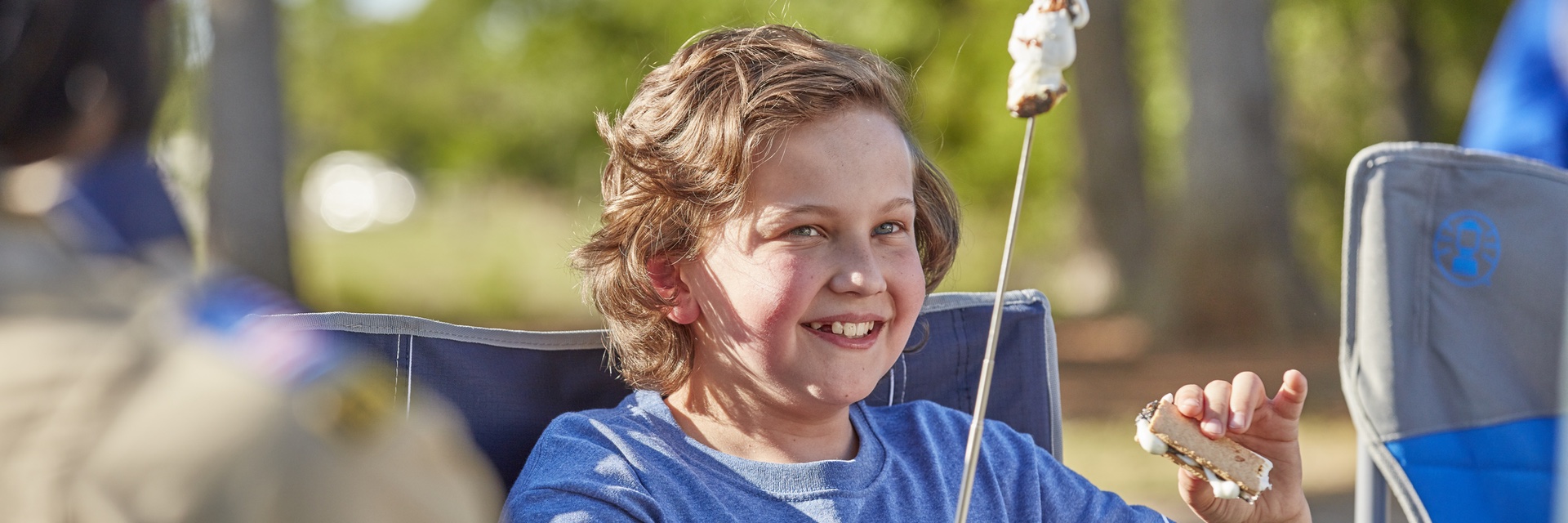
Come prepared so the treat goes smoothly. You will need a roasting stick for every attendee, plus plenty of marshmallows, graham crackers, and chocolate. Order extra sticks in advance and have a trash bag and hand wipes ready. Teach proper stick handling: points down, no waving sticks, the fire end gets hot.
Fire safety basics
Keep water, sand, and shovels on hand, and only the Keeper-of-the-Flame should tend the fire. Teach the Cubs this rule explicitly, along with never throwing anything into the flames.
The campfire
- Opening activity: when Scouts and friends have arrived, play a game to get the energy up and bring the kids together.
- Light the fire: have the kids drum on their legs while leaders make a dramatic entrance. Introduce the song-master and cheer-master.
- Build-up: fast, loud, action songs, short skits, and cheers between acts.
- S'mores: serve s'mores in the middle of the program. Have volunteers pass out marshmallows and chocolate squares as kids roast them.
- Wind-down: slower songs, calming stories, and a Cubmaster's Minute.
- Closing: thank everyone for coming, tell the parents what the next big adventures are, how to join the pack, and close with a quiet goodnight song to dismiss.
For ordering acts: put noisy acts early and calmer elements later, and avoid long pauses between acts.